
Author

admin

Browsing

The Venice Token price has continued its strong surge this month and is now trading at its all-time high. VVV token was trading at $15.2 on Sunday, a few points below the record high of $16.65. It remains nearly 1,500% above its lowest level in December last year. 

Venice Token price rallying amid growing usage and token burns

AI tokens have done relatively well in the past few weeks. For example, Bittensor (TAO) token has jumped by 9% in the last seven days. NEAR, ICP, Render, Virtuals, and FET have all jumped by over 10% in this period. 

Venice Token, on the other hand, has jumped by over 65% in this period, making it one of the top gainers in the industry. This surge happened because it is one of the top projects bringing real-world application of blockchain technology to the real world.

For starters, Venice AI operates a platform that integrates most AI models like DeepSeek, Grok, ChatGPT, and Claude. Users enter their queries and then the platform selects the best model to use, while emphasizing privacy.

Venice uses a freemium model. Users can use its platform for free or pay for tiered subscriptions, which start at $18 all the way to $200 a month. 

The VVV token has soared this year because of the ongoing hype around AI that has pushed top assets to record highs. For example, AI companies like Sandisk, Micron, and Western Digital are the top gainers in the S&P 500 Index this year. 

Similarly, AI companies have seen their valuations surge, with analysts placing Anthropic’s real value at over $1 trillion, up from $380 billion a few months ago. Anthropic’s annualized run rate (ARR) has jumped to over $30 billion. 

Therefore, traders believe that Venice should also have a similar valuation because of its ongoing growth. SimilarWeb data shows that Venice’s website had 26 million visitors between February and April, a 15% increase. Its monthly visits have jumped to over 8.8 million. 

Token burns accelerating

The VVV price has also soared because of the improving tokenomics as the network continues to incinerate its tokens. Data shows that the network continues to remove tokens in circulation. This trend will continue after they added the fee burn rate. For example, a subscription to the lowest package is burning $2 worth of tokens. 

As a result, according to its website, it burned tokens worth over $166k last month, up from $146k in the previous month. It has already burned about 42% of the circulating supply.

At the same time, investors are buying the VVV token because of the rising yield, which now stands at 14%. Users can use their VVV tokens to mint their DIEM tokens, which gives them $1 of daily credits to spend on the Venice AI platform.

These numbers explain why the volume of VVV tokens traded in exchanges has continued rising this month. Also, the futures open interest has continued to rise and is now at the highest level this year. 

Venice Token price technical analysis

VVV token price chart | Source: TradingView

The daily chart reveals that the VVV token price remained inside a narrow range of between $0.9745 and $4.90 for months. It even formed a cup-and-handle pattern, a common bullish continuation signs in technical analysis. 

The consolidation phase was part of the accumulation stage of the Wyckoff Theory. As a result, the coin has now moved to the markup phase, which is normally characterized by Fear of Missing Out (FOMO).

The coin has remained above all moving averages, a sign that bulls remain in control. However, it also poses a mean-reversion risk, where an asset moves back to its historical averages.

This mean reversion angle is possible as the coin has become highly overbought. As such, there is a likelihood that the token will pull back, and possibly retest the key support level at $10.l

The post Venice Token price: Why this AI crypto coin is soaring and what next appeared first on Invezz


Some of Wall Street’s biggest upside calls are not sitting in the mega-cap names.

They are hiding in small, volatile stocks with thin balance sheets, limited operating history and one big event ahead.

That is what makes them interesting, as in each case, the investment thesis comes down to a binary trigger: a trial result, a commercial turn, or a regulatory step that could force the market to revalue the stock fast.

That is the setup behind Atai Life Sciences, Vivos Therapeutics and Actuate Therapeutics.

Atai Life Sciences: A high-conviction wager

Atai Life Sciences is the most closely followed name on this list, and arguably the easiest for investors to understand.

The clinical-stage biotech is focused on psychedelic-assisted therapies for mental health conditions, particularly treatment-resistant depression.

The stock recently traded near $4, but Wall Street sees much more upside.

Current analyst targets cluster around the mid-teens, implying potential gains of nearly 300%.

Canaccord Genuity recently raised its price target to $15 from $14 while maintaining a Buy rating, citing encouraging clinical progress.

Broader sentiment toward the sector also improved in April after the White House moved to accelerate regulatory reviews of psychedelic therapies, giving the group a fresh tailwind.

Vivos Therapeutics: The lowest-priced name

Vivos Therapeutics is the most speculative of the three.

The stock recently traded around 97 cents, and H.C. Wainwright cut its target to $2.50 from $7 while keeping a Buy rating.

That still implies a very large gain, but the more important detail is the caveat.

The firm said dilution “may be inevitable” as Vivos needs additional capital, though it remained “cautiously optimistic” that operations could improve and revenue could keep growing in 2026.

That is why Vivos is a trader’s stock, not a core holding.

The bull case is that obstructive sleep apnea is a huge market and the company is trying to position its oral appliance therapy as an alternative to CPAP.

The problem is execution and financing, as in small-cap medtech, those two risks usually decide the stock long before the market can reward the product story.

Actuate Therapeutics: A classic binary biotech setup

The third name, Actuate Therapeutics, fits the same pattern in a more traditional biotech way.

H.C. Wainwright recently lowered its target to $15 from $20 but kept a Buy rating.

The stock was trading around $1.72 at the time, which leaves substantial upside if the company keeps advancing its lead program.

In a mid-stage trial, 44% of advanced pancreatic-cancer patients receiving Actuate’s experimental drug with chemotherapy were alive after one year, compared with 22% on chemotherapy alone.

Median survival also improved to 10.1 months from 7.2 months.

That kind of data is exactly what can move a small biotech sharply higher.

It does not guarantee success, and it does not remove the need for Phase 3 confirmation.

But it does turn a stock from a pure concept into a company with a real, measurable signal.

H.C. Wainwright said Actuate is now weighing multiple commercialization paths for elraglusib and planning a confirmatory Phase 3 study, which is the sort of milestone investors watch closely in this sector.

The post Analysts see 200%+ upside in these 3 high-risk stocks: here's why? appeared first on Invezz

Tilray Brands stock price crashed to its lowest level since August last year despite the recent US policy change that opened the door to its expansion in the country.

TLRY dropped to $5.6, much lower than the year-to-date high of nearly $10. This article explores some of the top reasons why the stock has plunged.

Tilray Brands stock has dropped as investors sell the cannabis reclassification news 

TLRY stock price went parabolic in April after the Justice Department and the FDA announced that they were reclassifying cannabis into a less dangerous drug. 

Such a move was good for Tilray, a company that has no cannabis operations in the United States.

In recent statements, the management has hinted of a possible US entry when business conditions improve.

Therefore, the stock has crashed as investors sell the news.

This is a common situation where investors buy an asset before or immediately after an important news event and sell it when the news event happens.

In this case, the cannabis reclassification was already priced in by market participants.

At the same time, there is a likelihood that the court will reverse the decision, noting that it did not follow the right procedure. Some interested groups have filed a lawsuit seeking to reverse it. 

Other cannabis stocks remain on edge, with the AdvisorShares Pure US Cannabis ETF (MSOS) trading at $5.25, down from the year-to-date high of $5.57.

The beverage business is still struggling 

Tilray Brands has been diversifying its business in the past few years as it seeks to offset the weakness of the cannabis industry.

Its approach has been to become a major player in the alcohol industry.

It has made some major acquisitions in the past few years, including from companies like AB InBev and Molson Coors.

The challenge, however, is that these efforts are not paying off as alcohol consumption drops.

Its recent results showed that the beverage business made $42.6 million in revenue, down from $55.9 million in the same period a year earlier.

Its gross profit margin dropped to 32% from the previous 36%.

Growth through acquisitions concerns

Tilray Brands stock price has also dropped because of the management’s approach of growth through acquisitions, essentially in the international business.

Its recent results showed that its revenue rose by 11% to $206 million. Its international business grew by 73% during the quarter.

It recently acquired BrewDog and Lyphe Group.

At the same time, Tilray continues to lose substantial sums of money. Its total loss narrowed to $25.2 million in its third quarter.

Tilray stock technicals have contributed to the crash

TLRY stock chart | Source: TradingView 

Technicals have also contributed to the ongoing Tilray Brands stock crash this year.

It has remained below all moving averages, and most recently, it dropped below the important support level at $5.93, its lowest level on March 30th this year, invalidating the forming double-bottom pattern.

There are signs the stock found rejection at the 200-day Exponential Moving Average.

Therefore, the most likely Tilray stock forecast is bearish, with the next important target being at $4.

The bearish outlook will become invalid if the stock moves above the 200-day moving average at $8.65.

The post Here’s why Tilray Brands stock has crashed after cannabis reclassification appeared first on Invezz

The USD/MXN exchange rate has come under pressure in the past few months as top emerging market currencies continued to beat the US dollar. It dropped to 17.30 on Friday, down from the year-to-date high of 18.14 as focus shifted to the US non-farm payrolls data and May 7th’s Mexico interest rates decision.

US non-farm payrolls data ahead 

The main catalyst for the USD/MXN exchange rate will be the upcoming US non-farm payrolls numbers, which will come out on Friday.

Economists expect these numbers to reveal that the economy created 60k jobs in April after adding 178k in the previous month. Most of these numbers will likely be in the hospitality industry as businesses prepare for the upcoming World Cup event.

The unemployment rate is expected to remain at 4.3%, while wage growth is expected to remain above 3%.

Still, the reality is that the US labor market is not doing well, as companies complain about the elevated cost of doing business and the ongoing AI integration.

Some large companies have announced layoffs in the past few months. For example, 17,000 Spirit Airlines employees lost their jobs after the company filed for bankruptcy. 

Coinbase is slashing 14% of its workers, while Cloudflare is cutting 1,100 employees. Data shows that tech companies reduced their workers by over 33k in April and this trend will continue. Some of the top jobs at risk are in the software industry as AI tools like Claude can simplify how products are shipped.

These numbers come after last week’s Federal Reserve interest rate decision in which officials decided to leave interest rates unchanged between 3.50% and 3.75%. Officials had a dovish tilt, with most of them focusing on the weak labor market.

The Federal Reserve is contending with the fact that the US is in a stagflation, a period characterized by high inflation and a slow economic growth.

Mexican Central Bank interest rate decision 

The other main catalyst for the USD/MXN exchange rate is the latest Bank of Mexico decision, which came out on Thursday.

The bank has been in a rate cut cycle, with the interest rate falling from 11.25% in 2024 to 6.50% today. Analysts believe that its rate cut this week was the final one during the cycle. Three board members voted to cut, while two of them favored leaving them unchanged.

The bank pointed to the deteriorating economy amid global challenges. Its economy shrank in the first quarter, while inflation dropped modestly during the quarter.

The Banxico interest rate cut has reduced its appeal among carry trade investors as the spread between the US and Mexican rates has narrowed. A carry trade is a situation where investors borrow a lower-yielding currency and invests the cash in a higher-yielding country.

USD/MXN technical analysis


USDMXN chart | Source: TradingView

The daily timeframe chart shows that the USD to MXN exchange rate has crashed from a high of 18.14 on March 20th to 17.30.

It has crashed below all moving averages, a sign that bears remain in control. Also, the pair has moved below the Ichimoku cloud indicator, while the Relative Strength Index (RSI) has tilted downwards.

Therefore, the most likely scenario is where the pair continues falling, potentially to the support at 17.08, its lowest level in February and March this year.

On the other hand, a move above the resistance at 17.58 will invalidate the bearish outlook and point to more gains. This is possible as the pair has formed a double-bottom-like chart pattern.

The post USD/MXN forecast after the final Mexico Central Bank rate cut appeared first on Invezz

Roughly 36,000 Heartwarming Hugs Bears, a stuffed animal manufactured by Build-A-Bear, are being recalled due to a zipper detaching from the bear’s pouch.

On Thursday, the U.S. Consumer Product Safety Commission announced that the stuffed animals pose a serious risk of injury or death, as the detached zipper can present a choking hazard.

The recall number is 034464. The recall number can be found on the product label located on the back of one of the bear’s legs.

The bear includes a stuffed heart that fits inside a pocket. The heart-shaped insert is filled with 2.5 pounds of ceramic beads and can be used as a heating pad or chilled for cooling comfort.

“The product is graded 3 years+ and carries a cautionary statement advising adult supervision due to the heated/cooled element,” the release stated.

The bear was sold between January 2026 and March 2026 for about $48.

Customers are advised to immediately stop using the Heartwarming Hugs Bear. Consumers who purchased the bear should return it to the nearest Build-A-Bear store or request a shipping label at www.buildabear.com/recalls. Once returned, Build-A-Bear will issue a refund to the original form of payment or provide a gift card.

There have been no reported injuries, although one consumer in the United Kingdom reported the zipper detaching.

For information on the recall visit Build-A-Bear online at www.buildabear.com/recalls according to the release.

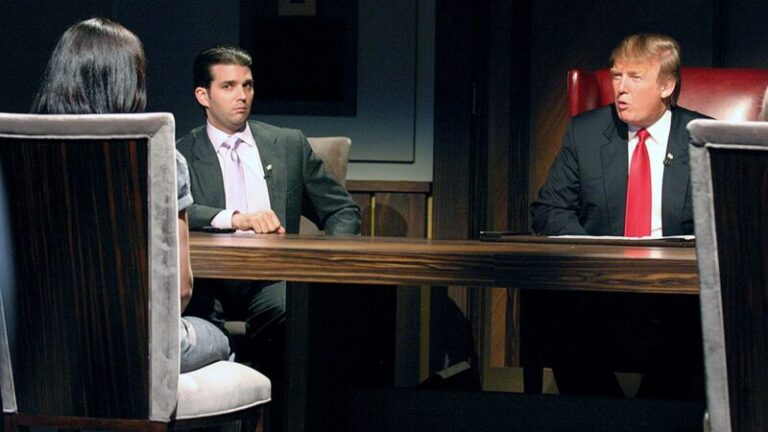
With President Donald Trump “hired” by the American people for a second term, Amazon — which now owns production rights to NBC’s “The Apprentice” — is looking for a new host to potentially reboot the once No. 1-rated television program, according to The Wall Street Journal.

Trump leveraged decades of media coverage as a New York mogul amid the ups and downs of the 1980s and 1990s into a smash-hit program that premiered in 2004, following several wannabe business executives through a several-week “job interview” to work for the Trump Organization.

Fifteen seasons and a presidency-compelled hiatus later, Amazon is reportedly considering Trump Organization Executive Vice President Donald Trump Jr. for the role, as the eldest son has served as a frequent stand-in “boardroom adviser” for Trump executives Carolyn Kepcher and George Ross.

Trump addressed rumors of a reboot on Thursday, telling Fox News’ Peter Doocy that his son is a “good guy” and would “probably be good” in the role.

JIMMY KIMMEL JOKES TRUMP SHOULD LET HIM HOST WHITE HOUSE CORRESPONDENTS’ DINNER TO ‘THINK OF THE RATINGS’

“He’s got a little charisma going. You need a little charisma for that sucker. So, we’ll see what happens,” Trump said.

Several people familiar with the discussions told The Wall Street Journal that Amazon executives have internally discussed casting Trump Jr. as a host for an “Apprentice” reboot if they do indeed launch the project.

The Journal reported Amazon has not yet approached Trump Sr., Trump Jr. or any Trump family members, but that, instead of NBC, it would air the show on Amazon Prime.

A source close to Trump Jr. told Fox News Digital on Thursday that the Journal report was indeed the first time the 48-year-old father of five had heard his name was in the pot.

Fox News Digital also reached out to the Trump Organization for comment, as well as Amazon and Amazon’s production company.

An Amazon spokesperson told the Journal that the Jeff Bezos-led company previously acquired MGM, which itself bought a majority stake in reality-show impresario Mark Burnett’s company several years earlier.

TRUMP’S KENNEDY CENTER HONORS OVERHAUL DELIVERS STAR-STUDDED LINEUP, NEW MEDALLION AND HISTORIC HOSTING ROLE

Burnett has launched several reality shows, including “The Apprentice” and CBS-aired contests “The Amazing Race” and “Survivor,” with the latter now in its 50th season. The credits for “The Apprentice” list Trump Sr. as executive producer.

A reboot would be Amazon’s second foray into Trumpworld in recent months, as it recently debuted a $40 million biopic of first lady Melania Trump that drew praise from supporters and mockery from critics like ABC’s Jimmy Kimmel.

“Melania” was directed by Brett Ratner of “Rush Hour” fame, as Trump reportedly pressed Paramount Pictures to revive the Jackie Chan-Chris Tucker series and put Ratner back at the helm, according to CNBC, which further reported the original New Line Cinema films are now subject to a distribution pact between Paramount and New Line parent Warner Bros.

Trump Sr. regularly touted his “Apprentice” success throughout his political tenure, once telling the National Prayer Breakfast that attendees should “pray” for former California Gov. Arnold Schwarzenegger after the “Terminator” took over the show and oversaw what the president called a ratings collapse.

KIMMEL FIRES BACK AT TRUMP’S DEMAND TO TAKE HIM OFF THE AIR, SAYS ‘I’LL GO WHEN YOU GO’

Schwarzenegger, the most recent Republican to serve as governor in Sacramento, occasionally spars with Trump, as he is seen as less bombastic and more politically moderate than the president.

“Hey Donald, I have a great idea,” Schwarzenegger shot back at Trump in an X video at the time.

“Why don’t we switch jobs — you take over TV — since you’re such an expert in ratings, and I take over your job so that people can finally sleep comfortable again — hmm?” the Austria native, who voted for then-Ohio Gov. John Kasich in 2016, quipped.

Fox News Digital reached out to NBCUniversal for additional comment on the potential resurrection of their onetime series. Neither Amazon nor the Trump Organization responded by publication time.

Fox News Digital’s Janelle Ash contributed to this report.

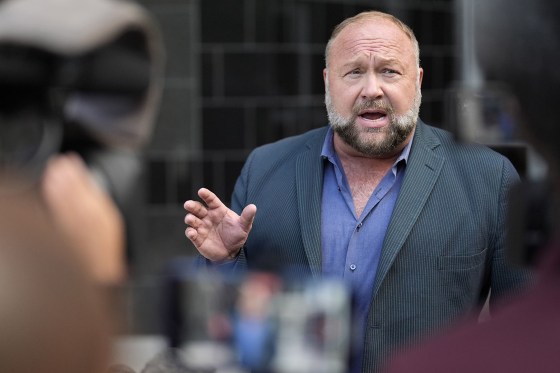
AUSTIN, Texas — The Onion’s plan to take over the Infowars platforms that Alex Jones built into a bullhorn of conspiracy theories and turn them into parody sites was in limbo again Thursday, after a Texas court paused a proposed deal involving the satirical news outlet.

Austin-based Infowars is facing liquidation because of the more than $1 billion in defamation lawsuit judgments Jones owes relatives of victims of the 2012 Sandy Hook Elementary School shooting for calling the Connecticut massacre a hoax. The proposed licensing deal would give The Onion temporary authority to use Infowars’ trademarks, copyrights and intellectual property while a state receiver in Texas works toward liquidation.

A state judge in Austin had scheduled a hearing Thursday on whether to approve The Onion deal with the receiver. But the proceeding fizzled into a status conference because the Texas Third Court of Appeals late Wednesday approved an emergency motion by Jones’ lawyers that temporarily blocked the transfer of any Infowars assets. The judge set another hearing for May 28.

Lawyers for the Sandy Hook families had asked the Texas Supreme Court to overturn the appeals court ruling, but the high court did not issue a decision before Thursday’s hearing.

“This newly insane, unprecedented legal stalling does nothing but delay our deal with the receiver to take control of InfoWars,” Ben Collins, The Onion’s CEO, said in a social media post ahead of the hearing. “We now expect new traps in Alex Jones’ amoral war to deny paying the Sandy Hook families, but we’re freshly surprised by the U.S. legal system’s appetite to put up with it.”

The Onion already has been selling Infowars merchandise on its own website, including T-shirts and tote bags with an Infowars logo that replaces the “o” with its trademark onion image. It wants to turn the Infowars platforms into comedy sites that would include spoofing Jones, conspiracy theories and right-wing talking points, while giving revenue to the Sandy Hook victims’ relatives.

Jones declared victory in videos posted on his social media sites after the appellate court ruling. He called The Onion’s plan illegal, citing pending appeals and his continuing personal bankruptcy case.

“I said days ago there’s no way the Third Circuit Court of Appeals in Texas doesn’t overturn this — you know they’re all Democrats — because it’s so outrageous what you’ve done,” Jones said.

After Thursday’s hearing, Mark Bankston, a lawyer for some of the Sandy Hook victims’ relatives, accused Jones of delaying the liquidation of Infowars numerous times with court filings.

“As far as the world is concerned, Infowars is dead. Everybody knows that,” he said. “He’s trying to keep the bloated corpse of a media organization alive. It’s all a joke. Everybody knows where this is going.”

It’s not the first time The Onion has hit a legal setback in plans to take over Infowars.

In November 2024, the Chicago-based satirical outlet was named the winner of a bankruptcy court auction of the assets of Infowars’ parent company, Free Speech Systems, aimed at helping pay some of the defamation judgments. But a federal judge overturned the auction results, citing problems with process and The Onion’s bid.

Jones said on his show this week that he has a new studio nearing completion. He already has set up a new phone app and websites, including one that sells the dietary supplements, clothing and other merchandise he hawks on his shows. And his personal X account, where he posts videos of his shows and has 4.5 million followers, is not affected by any of the court cases.

On Thursday night, Jones toasted to his crew and viewers during a livestream on X as a clock ticked down to when he said his final moments in the building would hit.

“We’re not here anymore because they’re turning the power off at midnight,” he said.

Global energy markets are entering a period of prolonged uncertainty as supply disruptions linked to the Middle East conflict begin to deepen, with recovery expected to take years rather than months.

The warning comes from Fatih Birol, who said the full impact of the crisis is only now starting to emerge.

Birol, who heads the International Energy Agency, said in an interview with the Neue Zuercher Zeitung newspaper that the recovery timeline will vary across countries.

However, the overall outlook remains prolonged.

“That will vary from country to country. In Iraq, for example, it will take much longer than in Saudi Arabia. However, we estimate it will take approximately two years overall to reach pre-war levels again,” Birol said, as cited in a Reuters report.

His remarks highlight the uneven pace of recovery across major oil-producing nations affected by the ongoing conflict.

Strait of Hormuz disruption seen as key risk

Birol further warned that markets may be underestimating the potential consequences of a prolonged disruption in the Strait of Hormuz.

The waterway is a critical route for global oil and gas shipments, and any extended closure could significantly disrupt supply chains.

According to Birol, the immediate impact of the conflict has been partially cushioned by shipments that were already en route before hostilities escalated in Iran.

These deliveries have now reached their destinations, temporarily easing supply concerns.

However, he pointed to a growing supply gap that is beginning to emerge.

“But no new tankers were loaded in March. There were no new deliveries of oil, gas, or fuels to Asian markets. This gap is now becoming apparent. If the Strait of Hormuz is not reopened, we must prepare for significantly higher energy prices,” Birol said, as reported by Reuters.

Supply gaps begin to surface in global markets

The absence of new shipments in March has started to expose vulnerabilities in global energy supply, particularly in Asian markets that rely heavily on imports from the Middle East.

Birol’s comments suggest that while short-term disruptions were masked by earlier shipments, the lack of fresh supply is now becoming more visible.

This emerging gap could tighten global markets and increase price volatility if supply routes remain constrained.

IEA considers further emergency action

Birol also addressed the possibility of additional intervention by the IEA through emergency oil stock releases, following a move in March.

When asked whether the agency could initiate another release, he indicated that the option remains under active consideration.

His statement signals that while no immediate action has been taken, the agency remains prepared to respond if market conditions worsen.

Outlook remains uncertain

The comments from the IEA chief underscore ongoing uncertainty in global energy markets.

Recovery timelines remain unclear, and much will depend on how the geopolitical situation evolves, particularly around key supply routes.

For now, the combination of delayed production recovery, disrupted shipping routes, and emerging supply gaps points to continued pressure on global energy prices in the near term.

The post MidEast energy output loss may take 2 years to recover: IEA appeared first on Invezz

President Donald Trump said prospects for a deal with Iran are improving, signaling potential progress in geopolitical tensions.

Oil prices moved higher as supply concerns persisted despite ongoing negotiations.

Bitcoin pulled back after failing to break key resistance, while the White House advanced plans to provide Anthropic’s AI model to federal agencies amid cybersecurity concerns.

Trump signals progress in US-Iran deal talks

President Donald Trump said prospects for a deal with Iran are “looking very good,” raising hopes that ongoing negotiations could extend a fragile truce.

“It’s looking very good that we’re going to make a deal with Iran, and it’s going to be a good deal,” Trump told reporters, adding that talks could resume as soon as this weekend.

Trump said Iran may have agreed to key conditions, including abandoning ambitions for a nuclear weapon and allowing oversight of nuclear material, though Tehran has not confirmed these claims. He also pointed to provisions involving “free oil” and reopening the Strait of Hormuz.

“They’ve agreed to almost everything,” Trump said. “They got to get to the table with a pen.”

The optimism contrasts with views from Gulf Arab and European leaders, who expect a deal to take months.

Meanwhile, Trump also announced a 10-day ceasefire between Israel and Lebanon, aimed at easing broader regional tensions.

Crude oil rises as supply concerns persist

Oil markets remained on edge, with prices climbing as uncertainty around supply disruptions continued to dominate sentiment.

Brent crude rose more than 3% to around $98.62 per barrel, while West Texas Intermediate traded above $93.

The gains came despite hopes that diplomatic efforts could eventually restore flows through the Strait of Hormuz, a critical artery for global energy shipments.

“The forward curves for Brent, and to a lesser extent WTI, continue to show backwardation, in other words, short-term supply issues which ease up over the rest of the year,” said David Morrison, senior market analyst at Trade Nation.

“But this backwardation is not as steep, or indeed as regular as it was a week ago. That suggests some nuances are coming back into pricing, which also suggests that the overall situation may be considered clearer than it was recently.”

The conflict has significantly disrupted global energy markets, with estimates suggesting around 13 million barrels per day of supply has been affected.

Bitcoin trades above $75,000

Bitcoin posted gains to trade above the $75,000 level.

The cryptocurrency reversed its drop from around $73,500 to trade at the $75,000 level, posting a 0.19% gain in the last 24 hours.

The $75,000-$76,000 is an important resistance zone for Bitcoin and breaking above it is crucial for further upside.

Robinhood shares fell while companies like Coinbase and Strategy gained as the top cryptocurrency posted modest gains.

The positive move came after US indices hit a fresh intraday high on Thursday.

White House moves to expand access to Anthropic AI model

The White House is preparing to make a version of Anthropic’s advanced AI model, Mythos, available to federal agencies, said a Bloomberg report.

Gregory Barbaccia, federal chief information officer, said officials are developing safeguards before any rollout.

“We’re working closely with model providers, other industry partners, and the intelligence community to ensure the appropriate guardrails and safeguards are in place before potentially releasing a modified version of the model to agencies,” Barbaccia wrote.

The model has been limited to select organizations due to concerns it could be misused by hackers. Officials have warned it could significantly enhance the ability to identify vulnerabilities in critical systems.

The move underscores the dual-use nature of advanced AI, offering both defensive cybersecurity benefits and potential risks if deployed without sufficient controls.

The post Evening digest: Trump Iran deal hopes rise, oil climbs on risks appeared first on Invezz

A senior official at the US Federal Reserve signalled a more cautious stance on interest rate cuts, as inflation remains persistent and geopolitical tensions add uncertainty to the economic outlook.

Stephen Miran, widely seen as one of the most dovish policymakers at the central bank, said on Thursday that he may scale back expectations for how quickly rates should decline.

Speaking at an economic forum in Washington, Miran said inflation dynamics had become “a little bit less favourable” even before the war involving Iran drove up global oil prices.

He noted that he had already reduced his projection for rate cuts by the end of 2026 from six to four during last month’s policy meeting.

“I might have three (rate cuts), I might have four, I haven’t made up my mind,” Miran said, referring to his current outlook.

Inflation persistence complicates policy path

Miran’s revised stance reflects growing concern within the Federal Reserve about the persistence of inflation.

A key measure of US price increases is expected to reach 3.2% as of March, remaining well above the Fed’s 2% target.

Despite this, Miran said he still expects inflation to move closer to the target over the next year.

“I think we’ll net out to being pretty close to target a year from now,” he said.

He added that he would still support a rate cut at the Federal Reserve’s upcoming April 28–29 meeting, citing concerns about a slowing labour market.

At the same time, Miran acknowledged that recent developments in energy markets have altered the balance of risks.

“The energy developments have changed the distribution of risks … and they’ve increased the risks of higher inflation,” he said.

War adds uncertainty to Fed outlook

The comments underscore how the Middle East conflict has complicated an already uncertain monetary policy environment.

Miran’s views have often aligned with US President Donald Trump’s calls for aggressive rate cuts.

However, his latest remarks suggest even the most dovish voices within the Fed are reassessing their positions.

Trump has expressed confidence that his nominee for Federal Reserve chair, Kevin Warsh, would pursue lower interest rates.

Yet, support among policymakers for immediate and significant cuts remains limited.

Market expectations also reflect a more restrained outlook.

Investors are pricing in the possibility that the Fed’s benchmark rate—currently in the 3.50%–3.75% range—could remain unchanged until as late as mid-2027.

Rising energy costs feed inflation pressures

Separately, John Williams, President of the Federal Reserve Bank of New York, said the war is already contributing to higher inflation through rising energy prices.

“Developments in the Middle East are driving significant increases in energy prices, which are already lifting overall inflation,” Williams said in remarks at the Federal Home Loan Bank of New York 2026 Member Symposium.

He noted that the trajectory of inflation will depend on the duration of the conflict.

A swift resolution could ease pressures, but a prolonged war could trigger a broader supply shock.

The post Dovish Fed official turns cautious as energy shock lifts inflation risks appeared first on Invezz